
🕐 Reading time: 5 minutes
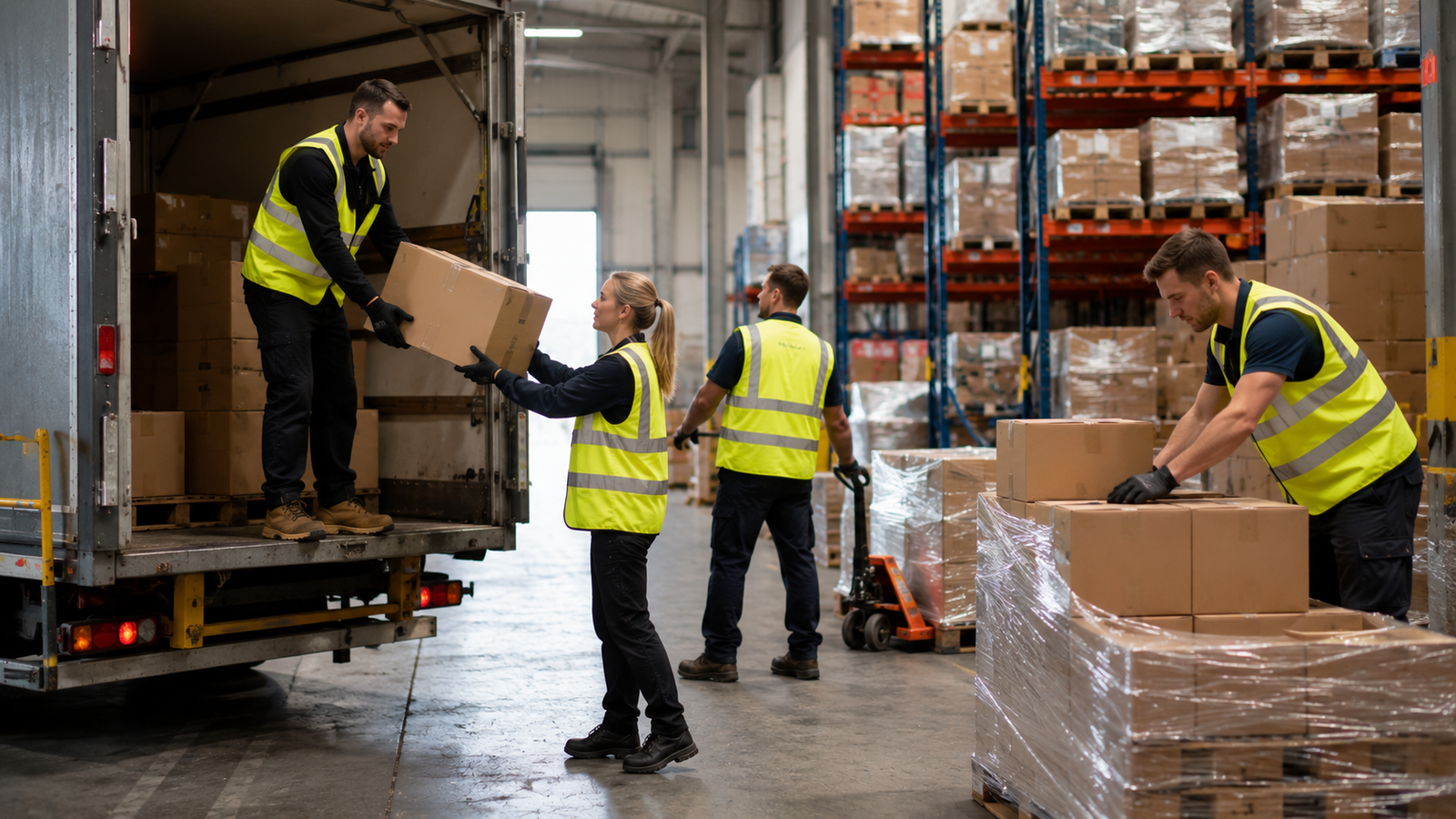
Loading and unloading goods is a critical part of working in a UK warehouse. For warehouse workers, agency workers, and anyone in their first UK job, understanding the right loading and unloading English phrases is essential for safety and efficiency — clear communication helps prevent accidents and builds trust with your team.
📋 Quick Summary
- Always communicate clearly before moving heavy items
- Report damaged or missing goods immediately
- Use polite phrases when asking for help with lifting
- Confirm the destination of goods before loading
- Safety is the top priority during loading and unloading
💬 Essential Loading & Unloading Phrases
“Is this pallet ready for loading?”
When to use: Checking if goods are prepared to go onto a vehicle.
Example: “I have the forklift ready. Is this pallet ready for loading?”
Asks for confirmation before moving items onto a truck.
“Where should I unload these boxes?”
When to use: Bringing goods into the warehouse from a delivery.
Example: “The truck is empty. Where should I unload these boxes?”
Asks for the correct location to place incoming goods.
“Could you help me lift this safely?”
When to use: An item is too heavy to move alone.
Example: “This box is over 20kg. Could you help me lift this safely?”
A polite request for physical assistance to prevent injury.
“There is a damaged item on this pallet.”
When to use: You spot broken goods during checking.
Example: “Stop loading. There is a damaged item on this pallet.”
Reports broken stock so it isn’t shipped to a customer.
“We are missing two boxes from this delivery.”
When to use: The physical count doesn’t match the paperwork.
Example: “I checked the manifest, and we are missing two boxes from this delivery.”
Informs the supervisor of a discrepancy in the shipment.
🏭 Real Workplace Scenario
Situation: A supervisor and a worker discussing loading a delivery truck.
Supervisor: “Are we ready to load the truck for London?”
Worker: “Almost. Is this pallet ready for loading?”
Supervisor: “Yes, that one goes at the back. But wait, check the boxes first.”
Worker: “I see a problem. There is a damaged item on this pallet.”
Supervisor: “Good catch. Let’s replace it before we load.”
💡 Why this works: The worker checks before loading and clearly reports a damaged item, preventing a bad delivery from reaching a customer.
⚠️ Common Mistakes to Avoid
✗ Wrong
Lifting heavy items without asking for help
✓ Correct
Always ask: “Could you help me lift this safely?”
✗ Wrong
Loading goods without checking the destination
✓ Correct
Ask: “Is this pallet ready for loading to [location]?”
✗ Wrong
Ignoring damaged boxes during unloading
✓ Correct
Report it immediately: “There is a damaged item here.”
✗ Wrong
Not checking the paperwork against the physical items
✓ Correct
Say: “Let me check the items against the delivery note.”
👩💼 Expert Note
Clear communication during loading and unloading is vital for your safety and the safety of your team. Never rush, always ask for help with heavy items, and report any problems immediately.
❓ Frequently Asked Questions
🧠 Quick Quiz — Test Yourself!
Q1: What should you say if a box is too heavy to lift alone?
Q2: If you notice a broken item while loading, what should you do?
Q3: What is the best phrase to ask where to put incoming goods?