
🕐 Reading time: 7 minutes
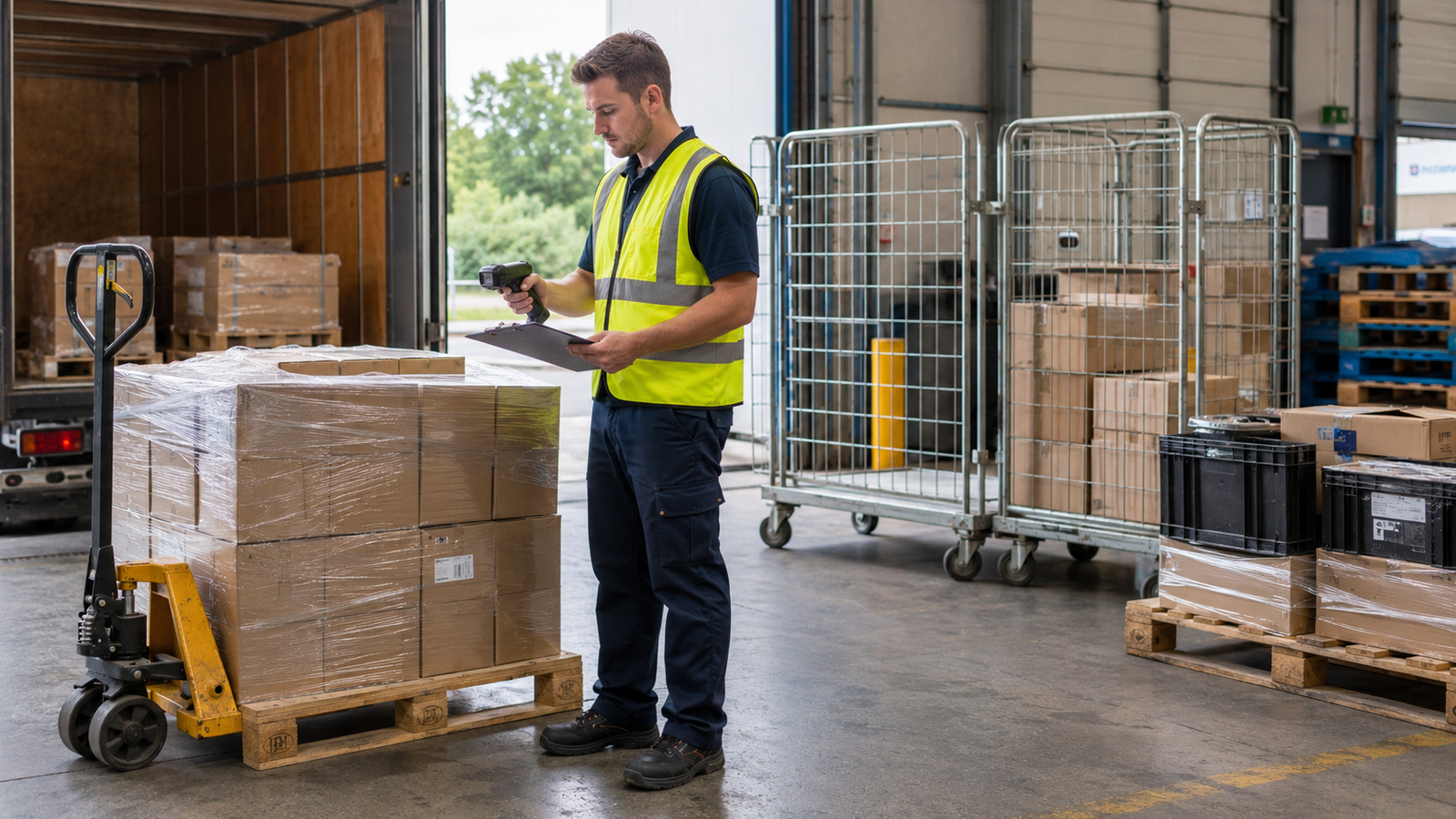
Working in the receiving or dispatch areas of a UK warehouse means you are the first or last person to handle products. Learning goods in and goods out English is vital, especially when these areas are fast-paced, with delivery drivers arriving and trucks waiting to be loaded.
📋 Quick Summary
- Always double-check the delivery paperwork before signing
- Use clear and polite phrases when speaking with delivery drivers
- Report any damaged goods immediately during the “goods in” process
- Confirm the correct destination before approving “goods out” shipments
- If you are unsure about a quantity, ask a supervisor for help
💬 Essential Goods In and Goods Out Phrases
“Are you here for a delivery or collection?”
When to use: Greeting a truck driver at the warehouse gate.
Example: “Good morning. Are you here for a delivery or collection?”
Asks the driver if they are bringing goods in or taking goods out.
“Can I see your delivery note, please?”
When to use: Checking the paperwork for incoming goods.
Example: “Before we start unloading, can I see your delivery note, please?”
Politely requests the official document that lists the delivered items.
“Please reverse into bay number three.”
When to use: Directing a truck to the correct loading dock.
Example: “You are clear to unload. Please reverse into bay number three.”
Gives clear instructions to the driver on where to park their vehicle.
“We have a shortage on this delivery.”
When to use: The physical items do not match the paperwork.
Example: “The paperwork says ten boxes, but there are only eight. We have a shortage on this delivery.”
Reports that items are missing from the incoming shipment.
“This pallet is damaged. I cannot accept it.”
When to use: Refusing broken items during goods in.
Example: “The boxes are crushed. This pallet is damaged. I cannot accept it.”
Clearly states that the warehouse will not take responsibility for broken goods.
“Can you sign here to confirm collection?”
When to use: A driver takes goods away (goods out).
Example: “The truck is loaded. Can you sign here to confirm collection?”
Asks the driver to legally acknowledge they have taken the items.
🏭 Real Workplace Scenario
Situation: A warehouse worker in “goods in” speaking with a delivery driver.
Worker: “Morning! Are you here for a delivery or collection?”
Driver: “I have a delivery for the main warehouse. Five pallets.”
Worker: “Great. Can I see your delivery note, please?”
Driver: “Here you go.”
Worker: “Thank you. Please reverse into bay number two. I will check the pallets as we unload.”
Worker: (After unloading) “I have checked everything. Can you sign here to confirm the delivery?”
💡 Why this works: The worker communicates clearly, checks the paperwork, gives polite directions, and ensures signatures are completed properly.
⚠️ Common Mistakes to Avoid
✗ Wrong
Signing the paperwork before checking the goods
✓ Correct
Always count the boxes and check for damage before you sign anything
✗ Wrong
Guessing where a driver should go
✓ Correct
Ask your supervisor if you are not sure which bay the truck should use
✗ Wrong
Ignoring damaged boxes during delivery
✓ Correct
Tell the driver immediately: “This pallet is damaged. I cannot accept it.”
✗ Wrong
Loading goods out without confirming the driver’s details
✓ Correct
Always ask: “What company are you collecting for?” to avoid giving goods to the wrong truck
👩💼 Expert Note
Whether you are receiving deliveries or preparing dispatch loads, accuracy is essential. Practising your goods in and goods out English helps you communicate professionally with drivers and ensures your paperwork is always correct.
❓ Frequently Asked Questions
🧠 Quick Quiz — Test Yourself!
Q1: What should you ask a driver when they first arrive at the gate?
Q2: If a delivery is missing two boxes, what should you say?
Q3: What must you do before a driver leaves with a “goods out” load?